What Does SN Mean – Chemistry, Tech, Medical and More
What Does SN Mean?
The meaning of “SN” depends entirely on the context in which it appears. Whether encountered in a chemistry textbook, a text message, a medical chart, or a product label, this two-letter combination can signify very different things. Understanding the specific context is essential for accurate interpretation.
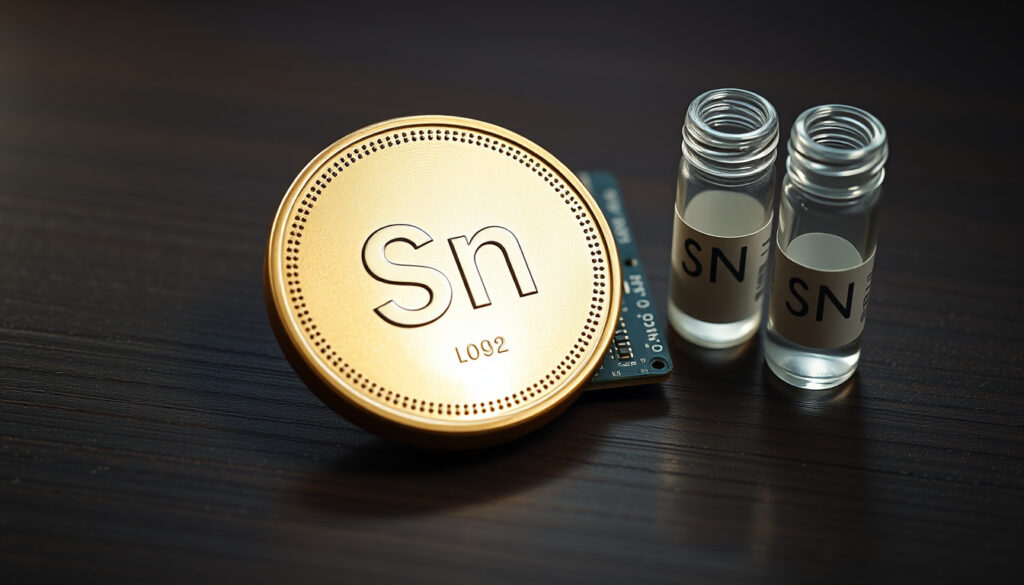
In scientific and technical settings, “Sn” serves as the official chemical symbol for tin on the periodic table, recognized internationally by organizations such as IUPAC. However, the same abbreviation can represent serial numbers, screen names, or various professional acronyms depending on the field. This variability makes “SN” a particularly context-dependent term.
This guide examines the most common meanings of “SN” across different domains, providing clarity on when each definition applies and how to distinguish between them. The goal is to help readers navigate situations where this abbreviation appears without second-guessing.
What Does SN Stand for? Top Definitions
Several distinct meanings exist for “SN” and “Sn,” each tied to a specific field or usage pattern. The capitalization often provides clues—chemical symbols use initial capitalization followed by lowercase, while many acronyms appear in all capitals. Below is an overview of the most frequently encountered definitions.
Overview Grid: Common Meanings of SN
Context: Chemistry
Symbol: Sn
Usage: Atomic number 50
Context: Tech/Products
Symbol: SN
Usage: Device identification
Context: Online/Social
Symbol: SN
Usage: Chat handle
Context: Medical
Symbol: SN
Usage: Healthcare role
Key Insights
- SN is highly context-dependent: always verify the field before assuming a meaning
- Most universally recognized: chemistry (Tin/Sn) due to standardized international notation
- The abbreviation appears across technology, healthcare, online communication, and manufacturing
- Chemical symbols follow specific formatting rules (one uppercase letter plus one lowercase)
- Slang meanings vary significantly between platforms and communities
- Professional abbreviations like medical terms often appear in documentation and records
- Serial numbers serve as unique identifiers for products, devices, and equipment
Quick Reference Table
| Context | Meaning | Example |
|---|---|---|
| Chemistry | Tin | Sn (atomic #50) |
| Texting | Screen Name | My SN is user123 |
| Medical | Student Nurse | SN rotation |
| Business | Stock Number | Part SN: ABC123 |
| Technology | Serial Number | SN: 2024-001234 |
When encountering “SN” or “Sn,” the surrounding context provides the most reliable clue to its intended meaning. Scientific and technical documents typically specify the field, while casual usage may require asking for clarification.
What is Sn on the Periodic Table?
On the periodic table, “Sn” is the official chemical symbol for the element tin. This designation comes from the Latin word stannum, which means tin. Tin holds atomic number 50, placing it in group 14 of the periodic table alongside elements like carbon, silicon, germanium, and lead. The PubChem database at the National Institutes of Health provides comprehensive data on this element’s properties and characteristics.
Tin is classified as a post-transition metal, characterized by its soft, silvery-white to metallic-gray appearance. The metal is notably malleable—it can be cut with a knife or bent by hand without shattering. When bent, tin produces a distinctive crackling sound known as the “tin cry,” which results from the movement of crystals within its structure. This acoustic phenomenon serves as a practical identification method for the pure metal. Students studying physics and mathematics may encounter similar principles when examining material properties and crystalline structures.
Key Properties of Tin (Sn)
- Atomic mass: 118.71 atomic mass units
- Density: 7.287 g/cm³
- Melting point: 231.93–231.97°C (449.47°F)
- Boiling point: 2602°C (4715°F)
- Electron configuration: [Kr] 4d¹⁰ 5s² 5p²
- Common oxidation states: +2 and +4
Tin occurs naturally primarily in the mineral cassiterite, which consists mainly of tin dioxide. Humans have utilized tin for thousands of years, with evidence suggesting discovery and use around 2100 BCE. Its most historically significant application came when ancient civilizations learned to alloy tin with copper, creating bronze—a development so influential it marked an entire prehistoric era. Breaking Atom provides detailed information about tin’s place in the periodic table and its industrial significance.
Modern Applications of Tin
Today, tin serves numerous industrial purposes beyond its ancient applications. The metal is extensively used in solder formulations for electronics, where its low melting point and electrical conductivity make it invaluable. Tin plating protects steel from corrosion, particularly in food containers and packaging materials—a use that dates back over a century due to tin’s resistance to rust and non-toxic nature. Additional applications include bearing alloys, bronze production, and various chemical processes.
Remember the distinction between “Sn” (tin on the periodic table) and “Na” (sodium)—a common source of confusion. The lowercase “n” in Sn distinguishes the chemical symbol from the abbreviation for sodium. This formatting follows IUPAC international standards for element nomenclature.
What Does SN Mean in Texting and Slang?
In digital communication contexts, “SN” most commonly stands for “Screen Name.” This usage appears frequently in online chats, gaming platforms, and social media environments where users identify themselves with handles distinct from their real names. A screen name serves as a digital identifier, allowing individuals to maintain privacy while participating in online communities.
The research conducted for this guide did not yield verified, consistent slang definitions for “SN” across major platforms. While various online sources suggest possible meanings, the evidence remains anecdotal and platform-specific. Users encountering “SN” in informal digital contexts should consider the specific community and conversation before assuming a particular meaning.
Common Digital Contexts for Screen Names
- Online gaming platforms and multiplayer environments
- Chat applications and messaging services
- Internet forums and discussion boards
- Social media bios and profile identifiers
- Email addresses or usernames on websites
Unlike standardized scientific terminology, slang abbreviations evolve rapidly and vary significantly across different online communities. A meaning that seems obvious in one platform might carry entirely different significance elsewhere. For those seeking to understand “SN” in texting or social contexts, observing how the abbreviation is used within the specific conversation or community provides the most reliable interpretation.
Slang meanings for “SN” remain largely unverified in academic or authoritative sources. When encountering this abbreviation in informal digital communication, consider asking for clarification rather than guessing. Misinterpretation can lead to confusion or misunderstanding in online interactions.
SN in Medical Terms and Other Contexts
Within healthcare and medical documentation, “SN” can represent several terms depending on the specific context and institution. Student Nurse (sometimes abbreviated as SN) appears commonly in clinical education settings, where it identifies nursing students participating in hands-on patient care rotations. This abbreviation helps distinguish student practitioners from registered nurses and other licensed professionals.
Additional medical abbreviations involving “SN” may include anatomical terms, procedure codes, or department designations. Medical professionals rely on standardized abbreviation lists to ensure consistent interpretation across healthcare settings. However, abbreviation usage can vary between institutions, making context essential for accurate understanding.
Serial Numbers in Technology and Manufacturing
Perhaps the most universally encountered meaning of “SN” appears on consumer products and electronic devices. Serial numbers (abbreviated SN) serve as unique identifiers assigned to individual items during manufacturing. These alphanumeric codes enable product tracking, warranty verification, theft prevention, and authentication.
Serial numbers typically appear on:
- Smartphones and computers
- Home appliances and electronics
- Automotive vehicles and components
- Warranty documentation and receipts
- Product registration materials
Consumers often need their device’s serial number when contacting technical support, registering products, or filing warranty claims. This practical application makes “SN” a familiar abbreviation in everyday life, even for those unfamiliar with scientific terminology.
Resources like Acronym Finder compile extensive lists of possible meanings for various abbreviations, though the organization notes that context remains essential for accurate interpretation. Users researching “SN” should consider their specific situation and field before settling on a definition.
The Evolution of SN Usage
The abbreviation “SN” and its variant “Sn” have developed distinct usage patterns over time, shaped by the needs of different disciplines. In ancient times, tin utilization predates written records, with archaeological evidence of tin ore processing dating back millennia. The Latin designation stannum provided the foundation for the chemical symbol still used internationally today.
- Ancient period: Tin discovered and used in bronze production (approximately 2100 BCE)
- Classical era: Tin trade routes established across Mediterranean regions
- Medieval period: Pewter alloy development expands tin applications
- Industrial revolution: Mass production introduces serial number tracking
- Digital age: Screen names and digital identifiers emerge with computing
- Modern era: Multiple concurrent meanings exist across fields
Modern manufacturing standardized serial number practices during the Industrial Revolution, when mass production created the need to track individual items. The digital era then introduced new contexts for abbreviations like “SN,” as online communication required alternative identifiers beyond real names.
Established Facts Versus Uncertain Meanings
Understanding what can be stated with confidence versus what remains unclear helps prevent misinformation when researching abbreviations like “SN.” This distinction becomes particularly important given the wide variety of contexts where the term appears.
| Established Information | Uncertain or Context-Dependent |
|---|---|
| Sn = Tin (chemical symbol from Latin stannum) | Slang meanings vary by platform and community |
| Tin has atomic number 50 | Sexual or niche abbreviations lack verified sources |
| Serial numbers identify products uniquely | Medical abbreviations may vary between institutions |
| Screen name = online identifier | Regional variations in abbreviation usage |
Scientific and technical definitions carry high certainty due to standardized nomenclature and international recognition. Informal slang and niche abbreviations, however, often lack consistent documentation, making verification difficult. Readers encountering “SN” in uncertain contexts should seek clarification from the source rather than relying on assumptions.
Why Context Determines Meaning
No single universal definition exists for “SN.” The abbreviation functions differently across chemistry, technology, healthcare, and digital communication, among other fields. This variability reflects how abbreviations develop organically within specialized communities rather than through centralized planning.
Professional and scientific contexts typically provide explicit context that clarifies abbreviations. Academic papers define terminology for their readers, while technical documentation often includes glossaries. Informal contexts may assume shared understanding without providing explanations, creating potential for misinterpretation.
When uncertain about what “SN” means in a particular situation, consider the surrounding clues: Where did you encounter it? What field or subject matter does the content address? Is there additional context that suggests a particular meaning? These questions can guide interpretation without requiring external research.
Sources and Expert References
The chemical properties and historical significance of tin (Sn) are well-documented in authoritative scientific sources. The information presented in this guide draws from established references including peer-reviewed databases and recognized educational materials.
“Sn is the symbol for tin, a post-transition metal with atomic number 50, classified in group 14 of the periodic table.”
— IUPAC Red Book (Nomenclature of Inorganic Chemistry)
Key authoritative sources consulted include:
- Wikipedia: Tin – General overview and historical context
- PubChem (NIH) – Chemical properties and safety data
- Breaking Atom – Educational periodic table resources
- Acronym Finder – Comprehensive abbreviation database
For slang and informal usage, research proved inconclusive. Unlike standardized terminology, informal abbreviations often lack consistent documentation, making verification challenging. Readers seeking meaning in casual contexts should consider asking directly rather than relying on unverified sources.
Summary
The meaning of “SN” or “Sn” depends entirely on context. In chemistry, “Sn” represents tin, a post-transition metal with atomic number 50, recognized internationally through standardized nomenclature. In technology, “SN” commonly indicates a serial number used for product identification. Healthcare contexts may use “SN” to denote Student Nurse or other medical terminology. Online communication frequently employs “SN” as an abbreviation for Screen Name.
For accurate interpretation, consider the surrounding context—scientific documents, product labels, medical records, and digital messages each suggest different meanings. Established definitions carry high certainty, while slang meanings remain poorly documented and highly variable. When encountering “SN” in unfamiliar contexts, seeking clarification proves more reliable than guessing. Understanding this context-dependent nature helps prevent miscommunication across different fields and settings. For related guides on physics and mathematics resources, visit our comprehensive reference section.
Frequently Asked Questions
What does SN mean sexually?
Research conducted for this guide found no verified, authoritative sources documenting a sexual meaning for “SN.” Informal slang abbreviations in this category vary significantly across communities and time periods, making verification difficult. Context provides the most reliable guide to intended meaning in any situation.
What is an SN postcode?
UK postcodes beginning with “SN” correspond to the Swindon area in Wiltshire. However, “SN” as an abbreviation in postal contexts specifically refers to this geographic designation rather than a general abbreviation.
What does SN mean in gaming?
In gaming contexts, “SN” most commonly appears as an abbreviation for Screen Name or Serial Number. Players often share their SN to connect with others for multiplayer sessions or friend requests. Exact usage may vary between specific games and platforms.
How do I find my device’s serial number?
Serial numbers typically appear on product labels, often on the back or bottom of devices. Smartphones allow access through Settings > About Phone, while computers display the information in System Preferences or BIOS. Product packaging and purchase documentation also commonly include serial numbers.
Why is tin’s chemical symbol Sn?
Tin’s symbol “Sn” derives from the Latin word stannum, which means tin. This follows the international naming convention established by IUPAC, where chemical symbols typically reflect Latin or original discovery names rather than English terms.
What is the difference between SN and Sn?
The capitalization provides context clues. Chemical symbols like tin use one uppercase letter followed by one lowercase letter (Sn). All-caps (SN) typically indicates an acronym or abbreviation in fields like technology, business, or communications rather than a chemical designation.
What does SN stand for in business?
In business contexts, “SN” may represent Stock Number, Shipping Number, or other domain-specific designations. Inventory management systems frequently use “SN” to track individual items. The specific meaning depends on the industry and company practices.
More related posts
 Best Easy Access Savings Account – Top UK Rates for 2025
 Cast of All Her Fault – Full Character Guide and Actor Breakdown
 Best Mattress Topper UK – Expert Reviews and Buying Guide
 Jason Manford – Family, Net Worth and Career in 2025
 Olivia Munn – Biography, Cancer Journey, and Life with John Mulaney
 Portuguese Man of War – Sting Dangers, Size and Facts
 Thiago Alcantara – Biography, Retirement and Career Overview
 Funny Jokes – 60+ Best Jokes for Every Occasion
