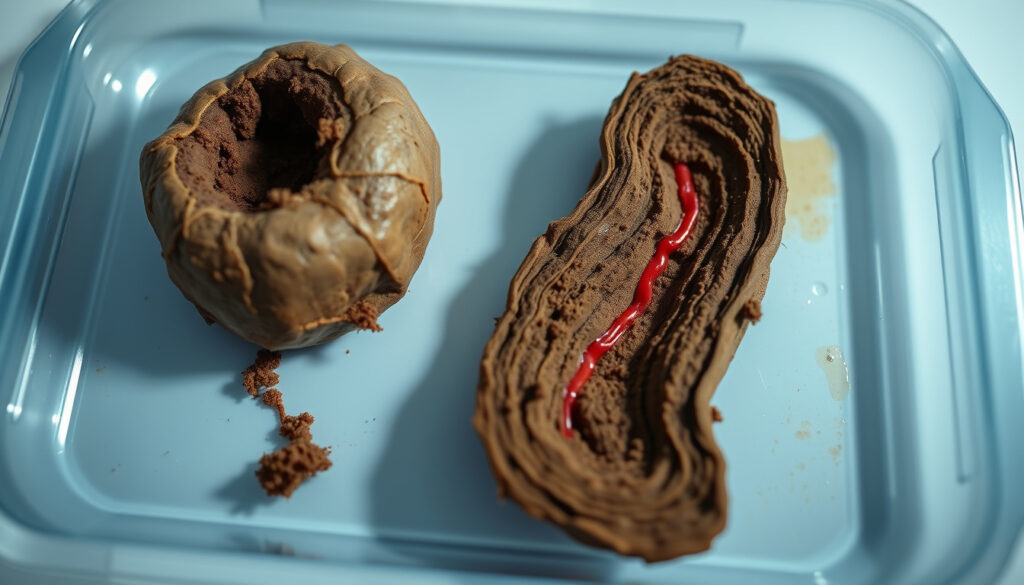
Stage 1 Colon Cancer Stool Pictures – What to Look For
Changes in stool appearance can sometimes signal health issues, including colon cancer. However, early-stage colon cancer often produces minimal or no visible symptoms, making regular screening essential for early detection. Understanding what to watch for, and what those changes actually mean, can help people make more informed decisions about when to seek medical evaluation.
This guide focuses specifically on stage 1 colon cancer and how stool may appear at this early stage. It is not a diagnostic tool. Any persistent change in bowel habits or stool appearance warrants a conversation with a healthcare provider.
What Does Stage 1 Colon Cancer Stool Look Like?
Stage 1 colon cancer affects the innermost lining of the colon and may extend into deeper layers. At this early point, noticeable stool changes are not guaranteed. Many individuals with stage 1 colon cancer report no visible symptoms whatsoever, according to the Mayo Clinic.
When changes do occur, they tend to be subtle. Possible stool appearances associated with stage 1 include:
Key Points About Stool Changes at Stage 1
- Stage 1 colon cancer most often produces no visible stool changes.
- Thin stools may develop gradually as a tumor narrows the colon passage.
- Blood in stool can range from bright red to dark and tarry depending on location.
- Mucus coating may appear as a clear or yellowish film on stool.
- These symptoms overlap with benign conditions such as hemorrhoids or irritable bowel syndrome.
- Regular screening, not symptom monitoring alone, is considered the most reliable early detection method.
- Consulting a doctor for any change lasting more than a few days is recommended.
| Symptom | Description | Stage 1 Relevance |
|---|---|---|
| Thin Stool | Pencil-like or ribbon-shaped due to tumor narrowing the colon | Common when present |
| Blood Streaks | Bright red on stool surface or toilet paper | Possible |
| Mucus | Clear or yellow coating mixed with stool | Frequent |
| Dark Stools | Tarry black appearance indicating digested blood | Less common at stage 1 |
| Shape Irregularity | Stools that appear misshapen or flattened | Possible |
| Invisible Blood | Microscopic blood not visible to the eye | Frequent but undetectable without testing |
Normal Stool vs Colon Cancer Stool
Comparing normal stool characteristics with those associated with colon cancer can help individuals recognize potential warning signs. However, this comparison is informational only and not a substitute for professional diagnosis.
How Normal Stool Typically Appears
Normal stool is usually brown, sausage-shaped, and soft to firm in texture. It passes without straining and maintains consistent shape and frequency day to day. Variations can occur due to diet, hydration, and stress, which are generally temporary and benign.
Stool Characteristics That May Indicate Colon Cancer
Stool changes linked to colon cancer tend to persist over time rather than resolving within a day or two. According to OSF Healthcare, key differences include:
- Consistently narrow or pencil-thin shape rather than occasional variation.
- Visible blood that is not related to dietary factors or temporary irritation.
- A persistent feeling of incomplete evacuation after bowel movements.
- Alternating constipation and diarrhea without clear dietary cause.
- Pale or clay-colored stools suggesting bile duct involvement.
Occasional variations in stool are normal and do not indicate cancer. Persistent changes lasting more than a few days, especially when accompanied by unexplained weight loss, abdominal pain, or fatigue, should be evaluated by a healthcare provider.
Colon Cancer Pictures of Mucus in Stool
Mucus in stool appears as a clear, white, or yellowish slimy coating. It can cling to the stool surface or appear mixed throughout. While small amounts of mucus are normal and produced by the colon lining, excessive mucus may indicate inflammation or a tumor, according to medical sources.
What the Research Shows
Sources such as colon cancer poop images describe mucus presence as frequently reported alongside other symptoms in individuals with colon cancer. However, mucus alone is not diagnostic. It commonly appears in conditions like inflammatory bowel disease, infections, and food sensitivities.
When mucus appears alongside stool changes such as blood, thin shape, or incomplete evacuation, it may warrant further medical evaluation. Looking at stage 1 colon cancer stool pictures can provide visual context for these descriptions.
When to Seek Evaluation
- Mucus is present consistently over several days.
- The stool appears coated or has an unusual oily quality.
- Bowel movements feel incomplete despite having a movement.
- Mucus is accompanied by visible blood.
- Diarrhea or constipation alternates without dietary explanation.
Thin Stool and Colon Cancer Pictures
Thin or pencil-thin stools occur when a growth partially blocks the colon passage. The stool takes on a narrowed, ribbon-like appearance as it is forced through a smaller opening. This symptom tends to develop gradually, which means it may not be immediately obvious.
Why Narrowing Occurs
As a tumor grows within the colon, it can reduce the available space for stool to pass. This restriction produces stools that are noticeably thinner than usual. The Mayo Clinic notes that this narrowing effect is one of the characteristic ways colon cancer affects stool appearance.
Recognizing Thin Stools
- The stool maintains a thin, flat shape rather than a typical rounded form.
- Thinning occurs gradually over weeks or months.
- Straining during bowel movements may increase.
- The change persists rather than improving with dietary adjustments.
- Other symptoms such as blood or mucus may accompany the thinning.
Thin stools can result from many conditions including IBS, dietary factors, dehydration, and muscle contractions. Do not rely on visual assessment alone. A healthcare provider can determine whether further testing is needed.
How Symptoms Progress: A Stage-by-Stage Timeline
Understanding how stool changes may evolve across colon cancer stages helps contextualize what occurs at stage 1 versus more advanced disease. This progression is based on information from the Mayo Clinic.
- Stage 0 to 1: Stool typically appears normal. Any visible changes are minimal and may include occasional blood or subtle shape irregularity.
- Stage 2: Visible blood becomes more common. Stools may appear thinner. Bathroom visits may increase, and a feeling of incomplete emptying can develop.
- Stage 3: Pencil-thin stools occur more frequently. Persistent diarrhea or constipation may alternate. Blood and mucus increase.
- Stage 4: Potential for bowel obstruction increases. Severe dysfunction may develop, requiring immediate medical intervention.
This timeline underscores why stage 1 is often undetectable through symptoms alone. Regular screening remains the most effective tool for early detection.
What Is Established and What Remains Unclear
Established Information
- Stage 1 colon cancer frequently presents no visible stool changes.
- When visible changes occur, thin stools and blood are the most commonly reported.
- Stool changes alone cannot diagnose colon cancer.
- Symptoms overlap significantly with benign conditions.
- Screening guidelines recommend starting colorectal cancer screening at age 45 for average-risk individuals.
Information That Remains Unclear
- Whether subtle shape changes in stool are directly attributable to a growing tumor or other factors.
- Whether visible symptoms will definitely appear within a specific timeframe if cancer is present.
- How individual factors such as diet, gut health, and genetics influence stool appearance in cancer patients.
The Cleveland Clinic emphasizes that individual experiences vary significantly, and stool symptoms alone cannot confirm or rule out cancer.
Why Colon Tumors Affect Stool Appearance
Colon tumors develop when abnormal cells grow uncontrollably in the lining of the large intestine. As these growths develop, they can physically obstruct the passage where stool travels, alter the surface of the colon lining causing bleeding, or disrupt normal bowel function, according to the National Cancer Institute.
The colon’s role is to absorb water and move waste toward the rectum. When a tumor interferes with this process, stool may emerge thinner, contain blood, or be coated with mucus. These changes reflect the tumor’s location, size, and how it affects the surrounding tissue.
What Experts Say About Stool Changes
“Blood in the stool is one of the most common signs of colon cancer, but it does not always make the stool look obviously different. Sometimes blood is present but invisible to the naked eye.”
— Mayo Clinic, Colon Cancer Stool article
“Most people with colon cancer do not experience symptoms until the disease is more advanced, which is why screening is so important.”
— OSF Healthcare, What Does Colon Cancer in Stool Look Like
Next Steps: Screening and When to See a Doctor
If you notice persistent stool changes lasting more than a few days, schedule an appointment with your healthcare provider. The American Cancer Society recommends screening for colorectal cancer beginning at age 45 for people at average risk.
Screening methods include colonoscopy, stool-based tests like the fecal immunochemical test, and imaging-based options. Early detection through screening dramatically improves outcomes, as stage 1 colon cancer has a five-year survival rate exceeding 90 percent when detected and treated appropriately.
Beyond screening, paying attention to your body and discussing any concerns with a medical professional remains important. Recognizing potential warning signs, including persistent stool changes, supports timely evaluation and care.
Frequently Asked Questions
Can stage 1 colon cancer be detected from stool changes alone?
No. Stage 1 colon cancer often produces no visible stool changes. Screening tests are the most reliable method for early detection at this stage.
What do stage 2 colon cancer stool pictures typically show?
At stage 2, visible blood in stool and thinner stools may become more apparent. Bathroom visits may increase, and a sensation of incomplete emptying can develop.
Are there reliable colon cancer poop images available?
Real photographs of patient stool are not typically published due to privacy and ethical considerations. Medical sources use descriptions and diagrams to illustrate typical patterns instead of actual images.
What does mucus in stool indicate if colon cancer is present?
Mucus coating stool can appear as a clear or yellow film. While mucus is common in many benign conditions, persistent mucus alongside other changes like blood or thin stools may warrant medical evaluation.
When should I see a doctor about stool changes?
Consult a healthcare provider if stool changes persist beyond a few days, especially if accompanied by unexplained weight loss, abdominal pain, fatigue, or blood in the stool.
How does thin stool relate to colon cancer?
Thin or pencil-like stools can result from a tumor narrowing the colon passage. This symptom tends to develop gradually and persists rather than resolving on its own.
What screening options exist for colon cancer?
Options include colonoscopy, stool-based tests such as the fecal immunochemical test, CT colonography, and flexible sigmoidoscopy. Your healthcare provider can recommend the most appropriate option based on your risk factors and preferences.
More related posts
 Pound to Rupee Indian – Current Rate 124.37 INR March 2026
 International Men’s Day 2025 – Date Theme and UK Events
 Curtis Sliwa – Guardian Angels Founder and NYC Mayoral Candidate
 Online Home Shop Discount Code – UK First Order & Free Delivery Deals
 Brian Harvey – Net Worth, Biography, and 2025 Update
 Oxford Instruments Share Price – Live LSE Data and Insights
 How Much Is PIP Per Week – 2025/26 Rates Explained
 Single Beds with Storage – Complete UK Buying Guide
