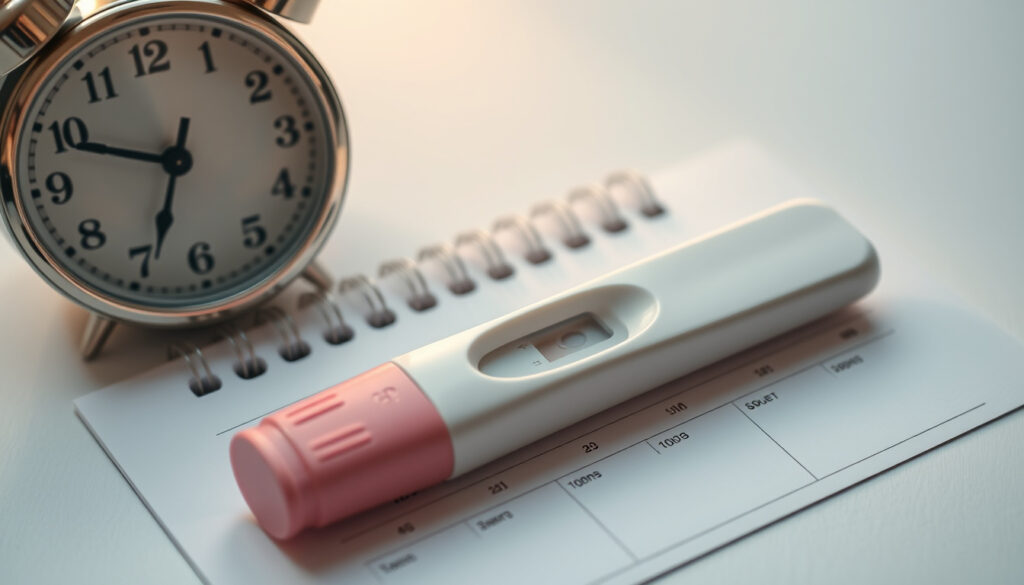
When to Take a Pregnancy Test – Best Timing for Accurate Results
Determining when to take a pregnancy test can feel overwhelming, especially when waiting for answers during an emotionally charged time. Understanding the science behind test timing helps ensure the most accurate results and reduces the frustration of false negatives that often occur when testing too early.
Pregnancy tests work by detecting human chorionic gonadotropin (hCG), a hormone produced shortly after a fertilized egg attaches to the uterine lining. The concentration of this hormone in urine directly affects test reliability, which is why timing matters significantly. Most at-home tests claim 99% accuracy when used correctly, but that accuracy depends heavily on when you take the test relative to ovulation, conception, and your missed period.
When Is the Best Time to Take a Pregnancy Test?
Medical professionals consistently recommend waiting until the first day of your missed period for the most reliable results, though the optimal window extends further depending on your goals. Understanding the differences between earliest possible detection, recommended testing time, and maximum accuracy helps you choose the right approach for your situation.
The earliest you can detect pregnancy is approximately 10-12 days past ovulation, though results at this stage remain unreliable. The recommended testing window begins on the first day of a missed period. Peak accuracy occurs 7-14 days after a missed period, with the most definitive results available around 21 days after unprotected intercourse.
- hCG levels double approximately every 48 hours during early pregnancy
- First morning urine provides the highest concentration of hCG for early testing
- Most standard tests detect hCG at concentrations of 20-50 mIU/mL
- Early detection tests can identify levels as low as 10-25 mIU/mL
- Waiting at least 14 days after intercourse eliminates most variability in results
- Irregular cycles require waiting at least 21 days after unprotected sex
| Testing Window | Timeframe | Accuracy Level |
|---|---|---|
| Earliest Possible Detection | 10-12 days past ovulation | Moderate reliability |
| First Missed Period | Day 1 of missed period | Over 99% with proper use |
| Optimal Accuracy | 7-14 days after missed period | Maximum reliability |
| Most Definitive Results | 21 days after unprotected sex | Highest certainty |
| Irregular Cycles | Minimum 21 days post-intercourse | Recommended standard |
| Early Detection Tests | Up to 6 days before period due | 77% detection rate |
What Is the Best Time of Day to Take a Pregnancy Test?
Timing your test relative to the time of day becomes important primarily when testing before your missed period or very early in pregnancy. First morning urine provides the most concentrated sample because hCG accumulates overnight without frequent urination dilution. Most manufacturers recommend using first morning urine for early testing to maximize detection probability.
Once you have reached your missed period, the time of day becomes less critical. The NHS confirms that urine samples collected at any time of day are suitable after a missed period because hCG levels have reached detectable concentrations regardless of sample timing. However, avoiding excessive fluid intake before testing remains advisable even during this window to prevent diluting the sample.
Should You Use First Morning Urine for Pregnancy Test?
Using first morning urine is strongly recommended when testing before your missed period or during the earliest detection window. This practice increases the probability of detecting pregnancy because at least three to four hours typically pass between nighttime urination and morning sample collection, allowing sufficient hCG accumulation. The Cleveland Clinic advises waiting at least three hours since your last urination when possible before collecting a sample for early testing.
Before collecting urine for a pregnancy test, avoid drinking large amounts of liquid including water. Limit fluid intake for at least one to two hours prior to testing to ensure adequate hCG concentration in the sample.
How Soon After a Missed Period Should You Test?
The moment you realize your period has not arrived marks the earliest practical point for testing with most standard pregnancy kits. Healthcare providers at Ohio State University confirm that testing can begin on the first day of a missed period, with accuracy exceeding 99% when the test is performed correctly at this point.
Can You Take a Pregnancy Test Before Your Period Is Due?
Advanced tests marketed as early detection can identify pregnancy up to six days before your expected period, though sensitivity varies significantly between products. Clearblue reports that their Early Detection test identifies 77% of pregnancies when used six days before the expected period. However, these early results come with a higher likelihood of false negatives, and confirmation testing remains necessary even with positive early results.
The decision to test early involves weighing the anxiety of uncertainty against the statistical likelihood of accurate results. Testing six days before a missed period means approximately one in four positive results may be incorrect, while waiting until after the missed period dramatically improves reliability. Women experiencing fertility treatments or those with high anxiety may benefit from early testing with proper expectations, while others may prefer waiting for definitive answers.
What if a Pregnancy Test Is Negative but Period Is Late?
Receiving a negative result despite a late period creates confusion and requires a strategic approach rather than immediate concern. The Apollo Cradle Group notes that testing too early remains the primary cause of false negatives, as hCG levels may not yet reach detectable concentrations even when pregnancy has occurred.
The appropriate response involves waiting three to five days and testing again if your period has not started. hCG levels increase rapidly, doubling approximately every 48 hours during early pregnancy, so a test that appears negative today may turn positive within days. The Cleveland Clinic recommends retaking a test if you receive a negative result and subsequently miss your period, as timing may simply have been premature.
Persistent negative results combined with continued absence of menstruation warrant medical consultation to rule out other potential causes including hormonal imbalances, thyroid disorders, or other underlying health conditions. You can learn more about related timing calculations in our guide to Days Between Two Dates, which some readers find helpful for tracking their cycles.
How Soon After Ovulation or Sex Can You Test?
Understanding the timeline between conception and detectable pregnancy requires distinguishing between ovulation, fertilization, and implantation. The Mayo Clinic explains that hCG production begins after a fertilized egg attaches to the uterine lining, which typically occurs around 14 days after conception.
How Soon After Sex Can You Take a Pregnancy Test?
Testing immediately after sexual intercourse provides no useful information because pregnancy cannot occur until ovulation and fertilization have happened, followed by the several-day process of the egg traveling to and implanting in the uterus. Fox Valley OB/GYN Associates recommends waiting at least 14 days after unprotected sex for reliable results, with 21 days representing the most accurate testing timeframe overall.
- 10-12 days after conception: hCG may be detectable in urine, though results remain unreliable at this early stage
- 14 days after unprotected sex: Minimum recommended wait time for reliable results
- 21 days after unprotected sex: Most accurate testing timeframe that corresponds to approximately one week after a missed period
How Long After Implantation Does hCG Show Up?
Implantation typically occurs between six and 12 days after fertilization, with most cases falling around day 10 of the cycle. Most pregnancy tests detect hCG once it reaches a concentration of 20-50 milli-international units per millilitre, which happens approximately 12-15 days after fertilization in most cases.
The variability in implantation timing directly affects test sensitivity. Women whose implantation occurs on the earlier end of the spectrum may achieve positive results sooner than those with later implantation. This biological variability explains why two women with identical intercourse timing may receive different test results on the same testing day. Most standard tests achieve reliable detection by the time of a missed period regardless of these individual variations.
How Accurate Are Pregnancy Tests and When?
At-home pregnancy tests have achieved remarkable accuracy rates, with most modern products claiming 99% effectiveness when used correctly and taken after a missed period. Planned Parenthood confirms these high accuracy claims, though they emphasize that proper timing and technique significantly influence results.
When Will a Pregnancy Test Be Most Accurate?
Peak accuracy occurs when hCG concentrations have reached levels that standard tests can reliably detect, which happens during the 7-14 day window after a missed period. Waiting at least 14 days after a missed period significantly increases accuracy by allowing sufficient hCG accumulation in the body. Earlier testing, while sometimes providing accurate results, carries substantially higher false negative rates that can create confusion and require repeat testing.
- Wait until at least the first day of missed period before testing
- Use first morning urine for early testing before missed period
- Avoid excessive fluid intake for 1-2 hours before testing
- Check expiration dates on test packages
- Follow package instructions precisely regarding timing and sample amount
- Consider confirming with a second test 48 hours after a positive result
Can You Get a False Negative Pregnancy Test?
False negatives occur more frequently than false positives and primarily result from testing before sufficient hCG has accumulated in the body. The American College of Obstetricians and Gynecologists acknowledges that early testing represents the most common cause of misleading negative results, particularly when women with regular cycles test before their expected period.
Other factors contributing to false negatives include diluted urine samples, improper test usage, expired tests, or individual variation in hCG production and implantation timing. The FDA notes that following manufacturer instructions carefully helps minimize error rates. The Food and Drug Administration provides guidance on home pregnancy test usage and recommends consulting healthcare providers when results seem inconsistent with symptoms or expectations.
Confirming Results After a Positive Test
A positive pregnancy test result, even from an early detection test, typically indicates pregnancy with high confidence. However, some women prefer confirmation through repeat home testing or medical consultation. The Cleveland Clinic notes that taking two pregnancy tests can help confirm results, and blood tests ordered by healthcare providers offer absolute certainty for those seeking medical confirmation.
Healthcare providers may order quantitative hCG blood tests that measure exact hormone levels, which proves particularly useful for tracking pregnancy progression in early stages. These laboratory tests detect lower hCG concentrations than home urine tests and can identify potential concerns through abnormal hormone doubling patterns. Scheduling a prenatal appointment after receiving positive home test results allows for proper medical oversight from the earliest stages of pregnancy.
Timeline of Pregnancy Test Detection
Understanding the sequence of biological events helps contextualize why timing matters so significantly for accurate pregnancy testing. The following timeline illustrates the progression from conception to detectable pregnancy.
- Ovulation: An egg is released from the ovary, typically around day 14 of a 28-day cycle
- Fertilization: Sperm meets egg in the fallopian tube, occurring within 12-24 hours of ovulation
- Cell division: The fertilized egg travels toward the uterus while dividing cells
- Implantation: The blastocyst attaches to the uterine lining, usually 6-12 days after fertilization
- hCG production begins: The placenta starts producing hCG immediately after implantation
- Earliest detection: hCG may reach detectable levels 10-12 days after conception
- Missed period: Approximately 14 days after conception, coinciding with expected menstruation
- Optimal testing window: 7-14 days after missed period for maximum accuracy
Understanding What We Know and What Remains Uncertain
| Established Information | Information That Remains Uncertain |
|---|---|
| Pregnancy tests detect hCG hormone in urine | Exact implantation timing varies between individuals |
| Most tests achieve 99% accuracy after missed period | How cycle stress affects test accuracy |
| hCG doubles every 48 hours in early pregnancy | Individual variation in hCG production levels |
| First morning urine provides best samples for early testing | Impact of specific fertility medications on test results |
| False negatives primarily occur from testing too early | Optimal retesting intervals after negative results |
| Blood tests provide greater sensitivity than urine tests | How weight or BMI affects detection timing |
The Science Behind Pregnancy Testing
Home pregnancy tests utilize immunoassay technology that detects antibodies specific to hCG in urine samples. Most standard tests identify hormone concentrations of 20-50 mIU/mL, while early detection varieties can register levels as low as 10-25 mIU/mL. This sensitivity difference explains why some tests claim the ability to detect pregnancy before a missed period while others recommend waiting for optimal accuracy.
The hCG molecule itself exists in multiple forms during early pregnancy, with intact hCG being the primary target of home tests. Certain medical conditions and medications can affect test accuracy, including fertility treatments that contain hCG as part of the medication protocol. Women who have recently completed fertility treatments should consult their healthcare providers about appropriate testing timing to avoid confusion from residual medication hCG.
Environmental factors and test storage conditions can also influence reliability. Extreme temperatures and humidity exposure may degrade test components, reducing effectiveness even before the printed expiration date. Checking package integrity before use and storing tests according to manufacturer recommendations helps maintain consistent performance.
Expert Recommendations and Sources
“Wait until the first day of your missed period to take a pregnancy test for the most accurate results. Most tests can detect pregnancy from this point with over 99% accuracy when used correctly.”
— Mayo Clinic, Home Pregnancy Tests Guide
“At-home pregnancy tests are generally 99% accurate when used correctly and taken at the right time. Testing too early is the most common cause of inaccurate results.”
— Cleveland Clinic, Pregnancy Tests Overview
Medical organizations including the American College of Obstetricians and Gynecologists and the Food and Drug Administration provide detailed guidance on home pregnancy test usage, emphasizing that these products serve as initial screening tools rather than diagnostic instruments. Positive results should be confirmed through medical consultation, particularly for women seeking prenatal care.
Summary and Recommendations
The most reliable time to take a pregnancy test is 7-14 days after a missed period, when accuracy rates exceed 99% with proper test usage. Testing earlier is possible with modern early detection products, though results carry higher uncertainty and may require confirmation through repeat testing. Using first morning urine before a missed period maximizes detection probability, while time-of-day flexibility exists after menstruation has been missed.
False negatives occur most frequently when testing occurs before sufficient hCG has accumulated, and retesting three to five days after a negative result addresses this concern effectively. Women with irregular cycles should wait at least 21 days after unprotected intercourse before testing. For those tracking related health information, our guide to How Long Does Menopause Last covers additional hormonal transition topics.
Regardless of test results, persistent symptoms or continued absence of menstruation warrants medical consultation to identify underlying causes and establish appropriate next steps for reproductive health management.
How soon after a missed period can you take a pregnancy test?
You can begin testing from the first day of your missed period. Most standard pregnancy tests achieve over 99% accuracy when taken at this point, though waiting longer further improves reliability.
Can you get a false negative pregnancy test?
Yes, false negatives occur most often when testing too early before hCG levels have reached detectable concentrations. Testing too early is the primary cause of inaccurate negative results.
How long after implantation does hCG show up?
HCG production begins after implantation, which typically occurs 6-12 days after fertilization. Detectable levels usually appear in urine 12-15 days after conception, around the time of a missed period.
What is the best time of day to take a pregnancy test?
First morning urine provides the highest hCG concentration for early testing before a missed period. After a missed period, you can test at any time of day since hCG levels will be sufficient for detection.
How soon after unprotected sex can you take a pregnancy test?
Wait at least 14 days after unprotected sex for reliable results. Testing 21 days after intercourse provides the most accurate results and corresponds to approximately one week after a missed period.
What if my pregnancy test is negative but my period is late?
Wait three to five days and test again, as hCG levels double approximately every 48 hours. If your period still does not arrive, consider consulting a healthcare provider to rule out other causes.
How accurate are pregnancy tests?
At-home pregnancy tests are generally 99% accurate when used correctly and taken after a missed period. Early testing before a missed period has higher false negative rates.
More related posts
 Carol Smillie – Biography, Husband, Net Worth, and New Career
 How Long Do Rabbits Live – Pet vs Wild Lifespan Guide
 The Boys in the Boat – True Story, Cast and Where to Watch
 Louis Partridge Movies and TV Shows – Complete Filmography Guide
 Family Lawyer Near Me – Find Local Help in Texa
 Utility Warehouse Customer Service – Phone, Email & Hours
 How to Get Rid of Cellulite – Science-Backed Methods That Work
 Stage 1 Colon Cancer Stool Pictures – What to Look For
