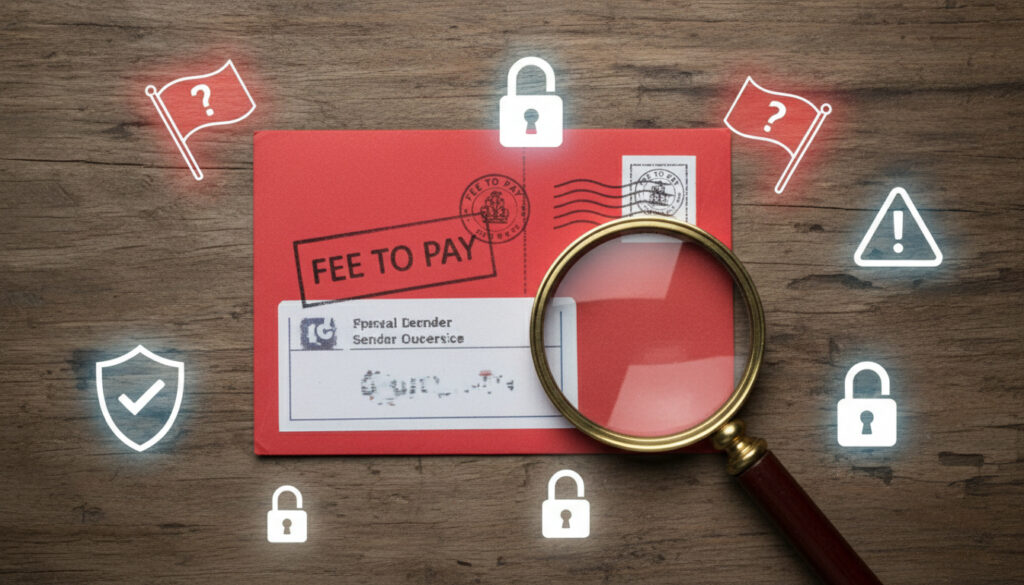
Royal Mail Fee to Pay Who Is the Sender – Scam Check and Safe Verification
Unexpected notifications claiming that Royal Mail requires payment to release a parcel from an unknown sender have surged across the UK. These messages, typically arriving via text or email, instruct recipients to click links and provide payment details or personal information to verify the sender’s identity before the item can be delivered.
Fraudsters design these communications to mimic official Royal Mail correspondence, using authentic-looking logos and urgent language to create panic. The scams frequently demand small sums—often between one and three pounds—purportedly for customs fees, rescheduling charges, or sender verification fees that do not exist within legitimate postal procedures.
Understanding the distinction between genuine customs charges and fraudulent verification requests protects consumers from financial loss. Recognizing the specific red flags associated with these phishing attempts prevents the compromise of sensitive banking credentials and personal data.
Is the Royal Mail ‘Fee to Pay’ Notice a Scam?
Fee to pay notice with unknown sender
Often scam; check official channels
Track parcel via Royal Mail site
Ignore texts/emails; use royalmail.com
- Unexpected notifications about parcels you did not order represent primary scam indicators
- Legitimate customs fees apply only to imports exceeding £135 in value
- Scam messages create false urgency with threats of immediate parcel return
- Fraudulent links mimic royalmail.com but direct to overseas payment portals
- No genuine Royal Mail policy requires prepaying fees for unknown sender verification
- Official communications never request banking passwords or one-time codes
- Spelling errors and suspicious URLs commonly appear in fraudulent messages
| Fact | Details | Source Type |
|---|---|---|
| Legitimate Fees | Customs/duty only on imports >£135 | Official policy |
| Scam Signs | Unknown sender, urgent £1-£3 payment | Common reports |
| Official Site | royalmail.com/track-your-item | Royal Mail |
| Reporting | actionfraud.police.uk | National centre |
| Phishing Contact | abuse@royalmail.com | Abuse team |
| Verification | Contact 0300 123 2040 for queries | Official helpline |
Who Is the Sender on Your Royal Mail Fee to Pay Notice?
How to Identify the Legitimate Sender
Genuine Royal Mail fee notifications include specific tracking numbers that correspond to actual parcels in transit. Recipients should independently navigate to the official Royal Mail website and enter this tracking reference, avoiding any links provided within unsolicited messages. The tracking system displays the sender’s information only when the parcel originated from a recognized commercial shipper or identifiable individual.
When parcels arrive from international destinations, customs documentation typically lists the sender’s details separately from any fee notification. Imperial War Museum Manchester – Hours, Tickets, Guide demonstrates how official venues provide clear visitor information; similarly, Royal Mail provides sender details through secure account portals rather than payment links.
When the Sender Appears Unknown
Scam messages frequently cite “unknown sender” status as justification for verification fees. However, Royal Mail processes do not require recipients to pay fees to discover or verify a sender’s identity. If the tracking number yields no results on the official website, or if the message references an unrecognized sender, the notification constitutes a fraudulent attempt to extract payment.
No legitimate Royal Mail procedure requires payment to verify an unknown sender or to release funds associated with unidentified parcels. Messages demanding such fees aim to harvest banking credentials or extract small payments that validate active phone numbers for future targeting.
What Does ‘Royal Mail Fee to Pay’ Actually Mean?
Customs Charges and Import Duties
Legitimate fees to pay arise exclusively when imported goods exceed specific value thresholds, currently set at £135 for most items entering the UK. Royal Mail processes these customs charges after physically inspecting the parcel and assessing duty liabilities. Recipients receive a gray card through postal mail—not email or text—providing instructions for payment at official branches or through verified online accounts.
Redirection and Rescheduling Fees
When recipients request parcel redirection to alternative addresses or reschedule delivery after failed attempts, Royal Mail applies standard administrative charges. These services require explicit customer initiation through official channels rather than unsolicited notifications. Admiral Customer Service Number – Official UK Helplines illustrates how genuine customer service operates through verified contact points, unlike scam messages that direct users to unverified payment portals.
Authentic customs charges apply only to imports valued above £135. Any message demanding payment for low-value items or claiming fees for “unknown sender verification” contradicts established Royal Mail protocols.
How to Pay Legitimate Royal Mail Fees Safely
Official Payment Channels
Secure payment occurs exclusively through royalmail.com or at physical post office branches. The official website requires users to manually enter tracking numbers rather than following embedded links. Royal Mail never requests payment through third-party applications, cryptocurrency transfers, or overseas banking details.
Verification Steps Before Paying
Before submitting any payment, recipients should confirm the tracking number exists within Royal Mail’s official system. Contacting customer service directly using numbers listed on royalmail.com—not those provided in suspicious messages—provides additional verification. If banking details were previously shared through fraudulent links, immediate contact with the financial institution prevents unauthorized transactions.
Forward suspicious emails to abuse@royalmail.com and report fraudulent texts through spam reporting tools. Gov.uk provides additional phishing reporting mechanisms, while the Which? consumer site tracks emerging Royal Mail scam variants.
When Do Royal Mail Fees Apply in the Delivery Process?
- Parcel Arrival: Item enters UK customs for inspection and valuation assessment.
- Duty Assessment: Customs officials determine if charges exceed the £135 threshold.
- Physical Notification: Royal Mail posts a gray fee-to-pay card to the recipient’s address.
- Payment Window: Recipients settle charges through official branches or verified online accounts.
- Release: Royal Mail releases the parcel for final delivery upon confirmed payment.
Distinguishing Legitimate Fees from Scam Attempts
| Indicator | Legitimate Process | Scam Attempt |
|---|---|---|
| Notification Method | Gray card via postal mail | Unsolicited email or text |
| Payment Link | User navigates to royalmail.com | Embedded suspicious links |
| Sender Information | Visible in tracking system | “Unknown sender” requiring verification fees |
| Urgency Level | Standard holding period applies | Immediate payment demanded |
| Contact Numbers | Official royalmail.com listings | Unverified mobile numbers |
| Payment Details | Secure UK-based processing | Overseas redirects requested |
Why Scammers Target Royal Mail Customers with Fee Requests
Postal services worldwide face impersonation by fraudsters exploiting the universal anticipation of parcel deliveries. The Royal Mail brand carries inherent trust, making recipients more likely to engage with fee requests that appear to originate from this established institution. Scammers capitalize on the volume of online shopping, knowing recipients expect multiple deliveries and may not immediately question additional charges. Royal Mail is warning of a surge in scam messages, often via text or email, claiming payment is needed to release a parcel and directing recipients to click Royal Mail fee to pay scam to provide payment or personal details.
The relatively small amounts requested—typically under five pounds—reduce skepticism while validating active contact details for future exploitation. Once recipients enter payment information, fraudsters gain access to banking details sufficient for larger unauthorized transactions. These tactics mirror global courier scams, with no evidence of legitimate Royal Mail processes matching the described fees for unknown senders or verifications.
What Official Sources Say About Royal Mail Fee Scams
Victims receive unexpected emails, texts, or calls claiming to be from Royal Mail, stating a parcel is waiting but requires payment of a customs fee, rescheduling fee, redirection charge, or verification fee for an “unknown sender” before release. Scammers use official-looking logos, parcel tracking numbers, and urgent language to appear legitimate.
Cyber security monitoring confirms these tactics mirror global courier fraud patterns, with scammers creating sophisticated replicas of tracking portals to harvest credentials. The absence of legitimate processes matching these described fees for unknown senders provides definitive confirmation of fraudulent intent.
Key Takeaways on Royal Mail Fees and Unknown Senders
Royal Mail fee notifications requiring payment for unknown sender verification constitute scams. Legitimate customs charges apply only to high-value imports and generate physical mail notifications rather than electronic requests. Recipients should verify all parcel details exclusively through royalmail.com, report suspicious messages to Action Fraud, and remember that Admiral Customer Service Number – Official UK Helplines represents the standard for verified customer service contact.
Frequently Asked Questions
Is Royal Mail charging fees for parcels from unknown senders?
No. Royal Mail does not charge fees to verify or release parcels from unknown senders. Any such request indicates a scam.
Royal Mail customs fee sender information: where do I find it?
Sender details appear in your Royal Mail tracking account when available. Legitimate customs notifications include this information on physical gray cards.
How to find sender details for Royal Mail parcel fee?
Enter your tracking number at royalmail.com/track-your-item. Sender information displays automatically for legitimate parcels.
Are Royal Mail fee scam texts common?
Yes. Fraudulent texts claiming unpaid fees represent prevalent phishing methods containing links to fake payment portals.
What should I do if I paid a scam Royal Mail fee?
Contact your bank immediately to block transactions. Report the incident to Action Fraud at 0300 123 2040.
Does Royal Mail send email fee notifications?
Royal Mail may email regarding held items, but never with embedded payment links. Always navigate independently to royalmail.com.
More related posts
 K-League XI vs Newcastle – 1-0 Result and Highlights
 War in Ukraine News – Latest Updates and Reliable Sources
 Nicknames Funny – 200+ Hilarious Ideas for Friends and Reddit Gems
 When to Take a Pregnancy Test – Best Timing for Accurate Results
 Prince William Is Changing Royal Protocol – Reforms vs Charles
 Louis Partridge Movies and TV Shows – Complete Filmography Guide
 Mother of the Bride Dress – 2025 Trends, Colors, Etiquette
 Best Movies on Amazon Prime – Hidden Gems You Can Watch Free
