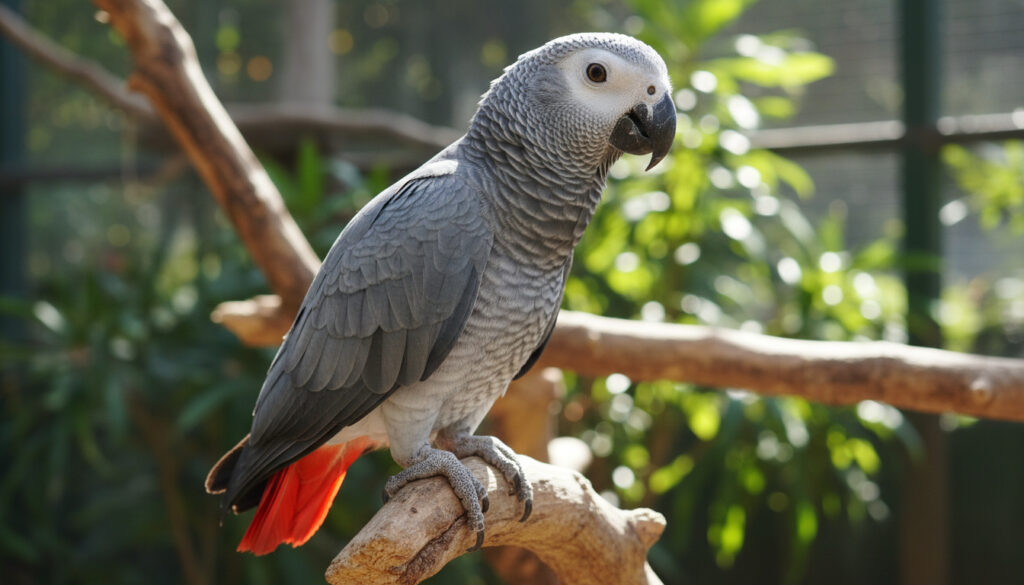
African Grey Parrot for Sale – Prices, Breeders & Buying Guide
African Grey parrots rank among the most cognitively advanced avian companions available to private owners, with hand-raised specimens commanding significant investment due to their longevity and communicative abilities. Prospective buyers encountering listings for these birds should expect substantial upfront costs, with reputable United States breeders typically pricing DNA-tested, hand-weaned babies between $4,500 and $7,500, depending on subspecies and geographic location.
The decision to purchase an African Grey extends far beyond the initial transaction. These birds routinely survive 40 to 60 years in captivity, creating a multi-decade commitment that rivals traditional domestic pets in scope. Understanding the financial, spatial, and temporal requirements before acquisition prevents the re-homing crises that plague this species when owners underestimate their needs.
Current market dynamics reflect strict regulatory oversight under CITES Appendix I classifications, which governs international trade but allows domestic breeding programs to supply the pet market. Buyers must distinguish between legitimate breeding operations and fraudulent schemes that exploit high demand with unrealistic pricing.
How Much Does an African Grey Parrot Cost?
- Hand-raised Congo babies with DNA testing typically reach the upper end of the market at $6,500–$7,500.
- Timneh subspecies generally trade at modest discounts, averaging $4,500–$5,500.
- Re-homed or sanctuary birds occasionally appear at $3,500+, though history verification proves essential.
- Offers below $4,000 for supposedly hand-raised infants frequently indicate scams or misrepresented parent-raised stock.
- Essential accessories—veterinary screening, transport carriers, and initial housing—add $500–$1,500 to first-year costs.
- Decades of specialized veterinary care, organic pellets, and environmental enrichment represent significant ongoing liability.
| Attribute | Specification |
|---|---|
| Origin | West and Central Africa |
| Scientific Classification | Psittacus erithacus (Congo), Psittacus timneh (Timneh) |
| Average Market Price | $6,000–$7,000 |
| Congo Price Bracket | $6,500–$7,500 |
| Timneh Price Bracket | $4,500–$5,500 |
| Minimum Cage Dimensions | 36″ × 24″ × 48″ |
| Weaning Age | 8–12 weeks |
| International Trade Status | CITES Appendix I (restricted) |
Where to Buy an African Grey Parrot
Legitimate acquisition channels center on established breeding facilities with demonstrated histories of ethical husbandry. Specialized breeder directories list operations such as JC Aviary in Texas, Florida Parrot in Florida, Parrot Stars in Illinois, and Ana’s Parrots in Pennsylvania, with pricing spanning from $4,800 to $7,500 depending on subspecies and age.
Evaluating Breeder Credentials
Physical inspection of the breeding facility remains non-negotiable. Prospective owners should observe parent birds, examine weaning protocols, and verify that infants receive appropriate socialization before separation. Ethical breeders provide DNA sexing certificates, closed-band identification, and comprehensive health documentation without hesitation.
Adoption and Rescue Pathways
Sanctuary networks and re-homing programs occasionally offer mature birds at reduced rates compared to neonates. Avian rescue specialists emphasize that adopted Greys require thorough veterinary assessment to identify nutritional deficiencies or behavioral issues from previous environments.
Marketplace listings advertising African Greys for $300–$800 universally indicate fraudulent schemes. Sellers demanding wire transfers before shipping—then disappearing—represent the most common deception. Legitimate hand-raised specimens never sell below $4,000 from reputable sources.
Geographic Accessibility
While many top-tier breeders offer nationwide shipping via specialized avian transport, proximity enables critical pre-purchase evaluation. Regional directories allow filtering by state, though buyers should prioritize inspection opportunities over convenience.
Are African Grey Parrots Good Pets?
The suitability of African Greys for domestic environments depends entirely on household stability and owner commitment. These birds possess cognitive capacities comparable to young children, requiring mental stimulation that casual keepers often underestimate.
Intelligence and Vocalization
African Greys demonstrate exceptional linguistic aptitude, often acquiring extensive vocabularies and contextualizing speech appropriately. However, this intelligence creates vulnerability to behavioral pathologies when environmental stimulation proves insufficient.
Social Requirements
Daily interaction constitutes a biological necessity rather than a luxury. Birds deprived of consistent human contact develop feather-destructive behaviors, aggression, or psychological distress. The commitment spans decades, significantly exceeding the longevity of rabbits and most traditional pets.
Lifespan Implications
With documented lifespans reaching 60 years, African Greys frequently outlive their original owners. Estate planning and provisions for post-owner care require consideration before acquisition, as these birds form intense bonds that disruption traumatizes.
Congo vs. Timneh: Which African Grey to Choose?
Two distinct subspecies dominate the companion market, each presenting specific physical and economic characteristics. Selection between them depends primarily on spatial constraints and aesthetic preference rather than ability, as both demonstrate equivalent cognitive capabilities.
Physical Distinctions
Congo African Greys (Psittacus erithacus erithacus) achieve lengths of 13–14 inches, displaying light silver-gray plumage contrasted against brilliant crimson tail feathers. Timneh variants (Psittacus timneh) mature smaller at 9–11 inches, exhibiting darker charcoal coloration with maroon tail markings.
Households with limited space may prefer the Timneh’s compact footprint, while those seeking maximum visual presence often select the larger Congo. Both subspecies require identical housing standards and dietary protocols.
Market Availability and Pricing
Congos command premium pricing due to higher demand and striking appearance, typically appearing at $6,500–$7,500 from established breeders. Timneh specimens, while equally capable communicators, generally list at $4,500–$5,500, offering entry points for budget-conscious buyers without compromising intelligence.
Individual pricing fluctuates based on weaning completion, DNA sexing confirmation, and closed-band identification. Older re-homed birds from the 1990s hatch era occasionally surface around $3,500, though prospective owners must verify health status rigorously.
African Grey Parrot Care Essentials
Sustaining African Grey health demands specialized infrastructure and dietary precision that generic pet care protocols fail to address. These requirements begin immediately upon acquisition and intensify throughout the bird’s lifespan.
Housing Specifications
Minimum cage dimensions of 36 inches by 24 inches by 48 inches provide baseline spatial requirements, though larger enclosures prove optimal. Structural integrity must withstand powerful beak strength, while play-top stands facilitate essential out-of-cage exercise periods.
Nutritional Protocols
Organic pellet formulations should constitute dietary foundations, supplemented with fresh vegetables and limited fruit portions. Hand-weaned babies transition most successfully to varied diets when exposed during the juvenile imprinting window.
Veterinary Infrastructure
Prospective owners must establish relationships with avian veterinary specialists before completing purchases. DNA-tested infants from ethical sources minimize genetic health risks, though annual screening for calcium deficiencies and respiratory conditions remains essential. This ongoing medical relationship parallels the extended timelines of other long-term biological processes.
Legal Considerations for Owning an African Grey
Domestic acquisition within the United States faces minimal federal restriction for intra-state transactions, though interstate transport may require health certificates depending on state regulations. CITES Appendix I listing prohibits international wild capture and importation for commercial pet trade, ensuring that legally available birds derive exclusively from domestic breeding programs or pre-existing captive stock.
Buyers should verify that breeders maintain appropriate documentation for interstate shipping, including health certifications and banding records. Regulatory compliance protects both the buyer and the broader conservation efforts that these restrictions support.
What Is the Ownership Timeline for an African Grey?
- Weaning Phase (8–12 weeks): Hand-raised babies become available for placement once fully weaned onto solid foods, typically exhibiting tameness and human bonding potential.
- Juvenile Development (Year 1): Intensive socialization and training periods establish behavioral baselines, vocabulary acquisition begins, and veterinary vaccination protocols commence.
- Sexual Maturity (3–5 years): Hormonal changes manifest, potentially affecting behavior as birds reach reproductive capability; personality becomes fully established.
- Long-term Maintenance (20+ years): Senior birds require enhanced veterinary monitoring, dietary adjustments, and environmental modifications to accommodate aging physiology.
What Is Certain vs. Uncertain About African Grey Ownership?
Established Facts
- Market pricing for hand-raised specimens consistently ranges $4,500–$7,500.
- Lifespan expectations of 40–60 years are well-documented in veterinary literature.
- CITES Appendix I status restricts international commercial trade.
- Minimum housing requirements specify 36″×24″×48″ cage dimensions.
- DNA sexing and closed banding indicate reputable breeding practices.
Variable Factors
- Individual personality traits remain unpredictable until maturity (3–5 years).
- Exact veterinary costs over decades cannot be precisely projected.
- State-specific interstate transport regulations vary and change periodically.
- Specific longevity depends on genetic factors and environmental quality.
Understanding the African Grey Trade
The commercial availability of African Greys reflects decades of domestic breeding development following international trade restrictions. These birds entered Western aviculture through intensive trapping operations that collapsed wild populations, prompting CITES protection in 1981. Contemporary markets depend entirely on captive propagation, with established bloodlines tracing back decades.
Conservation concerns persist regarding illegal wild capture in range states, though legitimate breeders maintain closed-loop populations that reduce pressure on native habitats. The high cognitive demands of these parrots create ethical imperatives for educated ownership, as behavioral issues from inadequate care generate surrender crises that sanctuaries struggle to accommodate.
Expert Perspectives on Acquisition
Too many babies die from poor breeding and uninformed owners. Verification of weaning status, parent bird health, and facility conditions prevents mortality and behavioral pathologies.
— Avian Husbandry Guidelines, African Grey Care Resources
If the price seems too good to be true, the seller disappears after payment. Real hand-raised African Greys require intensive labor and veterinary investment reflected in $6,000+ pricing.
— Market Analysis, Avian Exchange Commentary
Final Considerations for Prospective Owners
Acquiring an African Grey parrot represents a profound commitment to decades of specialized care, financial investment, and daily interaction. Successful ownership requires pre-establishment of avian veterinary relationships, appropriate housing infrastructure, and realistic assessment of lifestyle stability. Those meeting these criteria find unparalleled companionship in these cognitively sophisticated birds, while unprepared buyers contribute to welfare crises. Prospective owners should consult specialized breeder directories and avian veterinary resources before finalizing any transaction.
Frequently Asked Questions
How long do African Greys live?
African Grey parrots typically survive 40 to 60 years in captivity with proper veterinary care, nutrition, and environmental enrichment, often outliving their original owners.
What do African Greys eat?
These parrots require organic pellet-based diets supplemented with fresh vegetables and moderate fruit portions; seed-heavy diets cause nutritional deficiencies and health complications.
Can African Greys talk?
Both Congo and Timneh subspecies demonstrate exceptional vocal mimicry and contextual speech use, often developing vocabularies exceeding 100 words with appropriate training and socialization.
Are African Greys endangered?
Wild populations face CITES Appendix I protection due to habitat loss and historical trapping, though captive-bred specimens remain legally available through domestic breeding programs.
Do African Greys make good pets for beginners?
Their complex social needs, longevity, and sensitivity to environmental changes make them unsuitable for novice bird keepers; experienced owners with stable lifestyles achieve better outcomes.
How can I verify a breeder is legitimate?
Demand facility visits, parent bird observation, DNA sexing certificates, closed-band identification, and health records; refusal to provide these indicates unethical or fraudulent operations.
More related posts
 Galaxy Tab A9+ – Specs, UK Prices and Buying Guide
 ClassCharts Parent Login – Step-by-Step Official Guide
 Dr Melaxin Peel Shot – Complete Guide to Benefits and Use
 Oxford Instruments Share Price – Live LSE Data and Insights
 Jason Manford – Family, Net Worth and Career in 2025
 Mary-Kate and Ashley – What They’re Doing at 39
 Marks and Spencer UK – Your Comprehensive Shopping Guide
 2025 UK Government Payments – Dates, Eligibility and Updates
