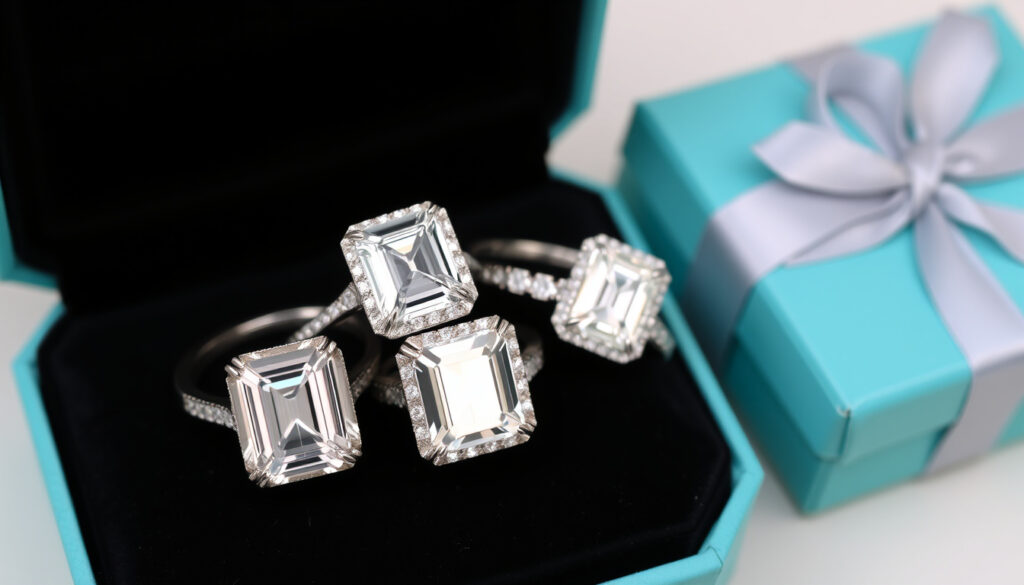
Emerald Cut Engagement Rings – Platinum, Gold, Tiffany and 2 Carat Guide
Emerald cut engagement rings occupy a distinctive space in fine jewellery, offering an architectural elegance that sets them apart from the more common round brilliant. These rings feature step-cut facets arranged in concentric rectangles, creating what professionals describe as a “hall of mirrors” effect rather than the traditional sparkle associated with diamond cuts.
The rectangular shape with clipped corners provides an elongated appearance that many buyers find particularly flattering on the hand. Combined with the cut’s ability to emphasize clarity and purity, emerald cut rings have attracted a devoted following among those seeking refined sophistication over ostentatious brilliance.
Emerald-Cut Engagement Rings from Tiffany
Tiffany & Co. introduced its first engagement ring setting in 1886, establishing standards that continue to influence the industry. The company has maintained its commitment to platinum settings, viewing the metal as essential for maximizing the natural radiance of step-cut diamonds. Tiffany offers emerald cut options ranging from classic solitaires to more elaborate halo and pavé designs, with pricing beginning around £8,800 for 0.50ct platinum pieces and extending well into six figures for larger stones.
The Tiffany Soleste® Emerald Halo features a platinum band with a pavé-set surround, while the Novo® Pavé collection offers continuous stone detailing along the band. These designs reflect the brand’s approach to combining emerald cuts with contemporary setting techniques while maintaining classical proportions.
- Step-cut facets create a sophisticated, icy glow rather than maximum sparkle
- The elongated table creates an illusion of greater size per carat compared to round brilliants
- Emerald cuts typically cost 10-20% less than comparable round brilliant stones
- Ideal for vintage and Art Deco inspired settings with clean geometric lines
- Popular among buyers seeking understated elegance over traditional sparkle
- Clarity becomes paramount due to the open facet structure
| Aspect | Details |
|---|---|
| Cut Style | Emerald (step-cut) |
| Typical Carat Weight | 0.25ct to 5+ ct |
| Preferred Metals | Platinum, 18ct yellow/rose gold |
| Characteristic Effect | Hall-of-mirrors refraction |
| Style Era | Art Deco, mid-century vintage |
| Price Positioning | 10-20% below comparable rounds |
Emerald Cut Engagement Rings in Platinum
Platinum has become the preferred setting metal for emerald cut engagement rings among luxury jewellers. The metal’s naturally white properties complement the icy clarity of step-cut diamonds without introducing colour interference. Tiffany & Co. exclusively uses platinum for its engagement ring settings, citing the metal’s durability, brilliance-enhancing qualities, and hypoallergenic properties.
The combination of platinum with emerald cuts works particularly well in knife-edge shank designs, where the tapered profile of the band creates visual interest while allowing maximum light passage beneath the stone. Prong settings in platinum typically use four or six claws positioned to secure the rectangular shape while maintaining sight lines to the diamond’s table.
Why Platinum Enhances Emerald Cuts
Step-cut diamonds depend heavily on light reflection through their large, open facets. Platinum’s reflective properties supplement the diamond’s natural clarity, creating the distinctive hall-of-mirrors effect that defines the emerald cut aesthetic. The metal’s strength also provides secure setting for the stone’s characteristic wide table, which requires careful prong placement.
When selecting platinum settings, verify the alloy composition. Some platinum alloys contain iridium or cobalt, which may affect long-term durability and re-polishing potential.
Emerald Cut Engagement Rings in Gold
Gold remains a viable and popular alternative for emerald cut engagement rings, particularly among buyers seeking warmth or specific aesthetic outcomes. Tiffany offers 18ct yellow and rose gold options for certain emerald cut designs, though the brand’s core platinum emphasis continues to dominate its marketing and product development.
The choice between yellow and rose gold affects how the emerald cut diamond appears. Yellow gold settings can mask slight warmth in lower colour grades, making F-G colour diamonds appear whiter than they might in platinum. Rose gold has gained popularity for its romantic associations and ability to complement a wide range of skin tones.
Gold Colour Considerations
Gold settings introduce warmth that either complements or competes with the diamond’s natural colour. For emerald cuts in yellow gold, buyers typically select G-H colour grades to balance the warmth without paying premium prices for higher colour ratings. Rose gold offers similar masking properties while providing a distinctly different aesthetic.
When pairing emerald cuts with gold settings, consider bezel or half-bezel designs. These settings partially frame the diamond’s edges, reducing colour contrast while maintaining the stone’s geometric elegance.
2 Carat Emerald Cut Engagement Rings
The 2 carat weight represents a particularly popular choice for emerald cut engagement rings, combining presence with practical wearability. The elongated proportions of the emerald cut create visual impact that rivals larger stones in other cuts, making 2ct emerald cuts frequently featured in luxury collections and high-street showcases alike.
Tiffany emphasises the 2 carat emerald cut across its platinum collections, offering scalable options from 0.25ct through 5+ carats. This range demonstrates how the cut’s proportions translate across sizes while maintaining the characteristic step-cut appearance. The brand’s financing options extend to 12-24 month interest-free arrangements, making premium stones more accessible.
Clarity Requirements for 2 Carat Stones
Larger emerald cuts demand exceptional clarity due to their open facet structure. Inclusions that might escape notice in a brilliant-cut stone become immediately apparent through the large, flat planes of an emerald cut. Industry guidance recommends VS2 minimum for eye-clean results, with many buyers upgrading to VVS1 or VVS2 for confidence.
Step-cut facets act like windows into the diamond. Always examine 2 carat emerald cuts under magnification before purchase, checking both the table and crown for inclusions that may affect durability or appearance.
| 4C Priority | Recommendation | Reason |
|---|---|---|
| Clarity | VS2 minimum (IF-VS2 ideal) | Step facets reveal inclusions clearly |
| Colour | G-H for platinum; F-G for gold | Balances tint in respective settings |
| Cut | Excellent symmetry and polish | Maximizes light return without GIA grade |
| Carat | 0.25-5+ ct (2ct particularly popular) | Elongated shape enhances perceived size |
History of Emerald Cut Engagement Rings
The emerald cut originated in the 1500s as a method for cutting emeralds, designed to minimise damage to the relatively soft gemstone while maximising its colour display. Diamond cutters later adopted the technique, refining it to enhance the natural properties of the harder material.
The cut gained significant popularity during the Art Deco period of the 1920s and 1930s, when geometric precision and architectural elegance dominated design sensibilities. Vintage emerald cut rings from this era remain highly collectable, valued for their historical significance and the craftsmanship of their step-cut proportions.
- 1500s: Technique developed for cutting emeralds, prioritising preservation over brilliance
- 1920s-1930s: Art Deco movement establishes emerald cuts as symbols of modernity and sophistication
- 1940s-1950s: Mid-century designs incorporate emerald cuts in platinum settings with geometric accents
- 1886: Tiffany & Co. introduces the Tiffany Setting, later incorporating emerald cuts into its collections
- Present: Revival of interest in vintage aesthetics drives renewed appreciation for step-cut designs
Pros and Cons of Emerald Cut Engagement Rings
Understanding the advantages and limitations of emerald cuts helps buyers make informed decisions aligned with their priorities and lifestyle requirements.
| Advantages | Considerations |
|---|---|
| Hall-of-mirrors effect creates sophisticated, icy glow | Inclusions more visible; requires higher clarity grades |
| Elongated shape appears larger per carat than rounds | Less traditional sparkle compared to brilliant cuts |
| Typically 10-20% less expensive than comparable rounds | Brand premiums apply at luxury retailers |
| Vintage elegance suits platinum and gold settings | Limited GIA cut grading affects standardisation |
| Clean lines complement Art Deco and modern styles | Requires secure setting due to wide table exposure |
Pre-owned Tiffany emerald cut rings appear on secondary markets at 30-50% below retail pricing, offering access to brand prestige at reduced initial cost. However, buyers should verify authenticity and understand that pre-owned stones may have different clarity characteristics than current inventory.
Understanding Emerald Cut Aesthetics
The emerald cut occupies a unique position among diamond shapes because its visual impact depends less on fire and brilliance than on clarity and geometric precision. Where round brilliants chase light to create sparkle, emerald cuts invite light into the stone, allowing it to travel through the stepped facets before reflecting back as steady, luminous patterns.
This characteristic makes the cut particularly suited to buyers who appreciate subtle sophistication over dramatic sparkle. The rectangular proportions also create an elongating effect on the finger, which many wearers find flattering regardless of hand size or shape.
Vintage emerald cut engagement rings from the mid-century period demonstrate how the cut has maintained its appeal across decades. These pieces often feature more pronounced step-cut proportions than contemporary stones, with wider facet tables and more visible depth between the crown and pavilion.
Where to Purchase Emerald Cut Engagement Rings in the UK
British buyers have access to emerald cut engagement rings across multiple retail channels, from luxury boutiques to independent Hatton Garden jewellers. Tiffany & Co. operates flagship boutiques in major cities, offering consultation services and custom engraving options. The brand’s lifetime servicing and resizing policies provide ongoing support that many buyers value alongside the product itself.
Astar Diamonds, based in London’s Hatton Garden jewellery district, features emerald cut options in both natural and lab-grown varieties, emphasising clarity selection for step-cut stones. This specialist approach reflects the increased attention to quality that emerald cuts demand compared to more forgiving brilliant cuts.
High-street retailers and online platforms offer more accessible entry points, with ready-to-ship options in various metals and carat weights. These channels suit buyers prioritising convenience or budget considerations over bespoke service.
Key Takeaways
Emerald cut engagement rings offer a distinctive alternative to traditional round brilliant designs, combining vintage sophistication with practical value advantages. The step-cut faceting structure prioritises clarity over sparkle, requiring buyers to prioritise higher clarity grades while potentially accepting slightly lower colour ratings. Platinum settings have become the luxury standard, though gold options provide warmth and variety. The 2 carat weight particularly showcases the cut’s ability to create presence through proportion rather than raw carat weight alone.
For those planning broader wedding celebrations, exploring Mother of the Bride Dress options can complement ring selection, while understanding What Is a Civil Partnership may help clarify the legal framework surrounding engagement and marriage in the UK.
Frequently Asked Questions
Why are emerald cuts less expensive than round brilliants?
Emerald cuts typically cost 10-20% less than round brilliants of similar quality because they require less rough diamond material to produce. The step-cutting process also generates less waste, and demand for emerald cuts remains lower than for round brilliants.
What clarity grade do I need for an emerald cut diamond?
Industry standards recommend VS2 minimum for eye-clean results. Many buyers upgrade to VVS1 or VVS2 because step-cut facets act like windows, making inclusions more visible than in brilliant-cut stones.
Can I find vintage emerald cut engagement rings?
Yes, vintage emerald cut rings from the Art Deco and mid-century periods remain available through specialist dealers and auction houses. These pieces often feature more pronounced step-cut proportions and platinum settings characteristic of their eras.
Does the GIA grade emerald cut diamonds?
The GIA provides colour, clarity, and carat grades for emerald cuts but does not assign a cut grade, unlike with round brilliants. Buyers should evaluate symmetry, polish, and proportions directly by examining the stone or requesting detailed grading reports.
Are lab-grown emerald cut diamonds available?
Lab-grown emerald cut diamonds have entered the market, offering ethical sourcing and reduced pricing compared to natural stones. Specialist retailers including Astar Diamonds now stock lab-grown options alongside natural varieties.
What maintenance do emerald cut engagement rings require?
Regular professional cleaning and inspection help maintain the appearance and security of emerald cut rings. Insurance coverage is recommended given the high clarity requirements and value of these stones.
Do emerald cuts appear larger than their carat weight suggests?
The elongated table and rectangular shape of emerald cuts create a visual perception of greater size compared to round brilliants of equal weight. This characteristic makes them popular among buyers seeking presence without the cost of significantly larger stones.
More related posts
 Taylor Townsend – Age, Height, Net Worth & Career Stats
 A Knight of the Seven Kingdoms – Dunk and Egg Adventures
 Amazon Fire Stick Remote – Troubleshooting and Replacement Guide
 Marks and Spencer UK – Your Comprehensive Shopping Guide
 Shelbourne vs Crystal Palace – 3-0 Match Report and Analysis
 How to Get Rid of Cellulite – Science-Backed Methods That Work
 Prince William Is Changing Royal Protocol – Reforms vs Charles
 Quick, Draw! – The Google AI Game Guessing Your Doodles
