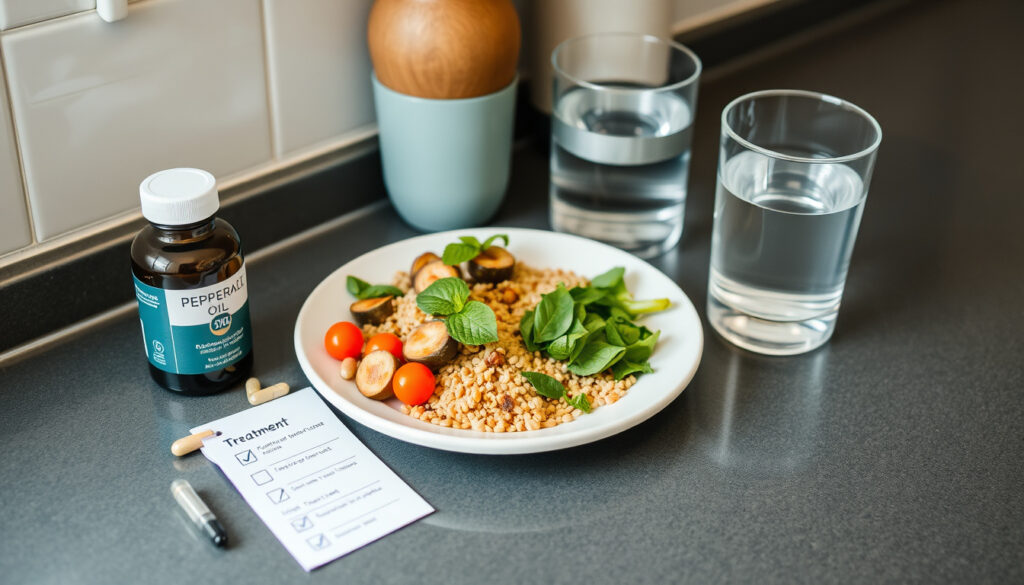
Irritable Bowel Syndrome Treatments – Evidence-Based Guide
Irritable bowel syndrome (IBS) affects an estimated 10 to 15 percent of people worldwide, making it one of the most common gastrointestinal disorders. Yet despite its prevalence, many patients struggle to find clear, evidence-based information about effective treatments. This guide examines the medications, dietary strategies, and lifestyle adjustments that form the core of modern IBS management, drawing on guidance from major health organizations and recent clinical guidelines.
IBS is a chronic functional disorder – the digestive tract appears normal on examinations, but the way it functions is altered. Symptoms range from abdominal pain and bloating to diarrhea, constipation, or an alternating pattern of both. Because the condition has no single cause and no permanent cure, treatment must be individualized and often combines several approaches.
How to Cure IBS Permanently?
IBS has no known permanent cure. It is a chronic condition that typically fluctuates over a person’s lifetime. However, most people achieve significant symptom control through a combination of diet, medication, and lifestyle changes. The goal of treatment is not eradication but long-term management and improved quality of life.
Antispasmodics, laxatives, antidiarrheals, and prescription drugs for IBS-C/D.
Low-FODMAP, fiber adjustments, elimination diets, and meal planning.
Stress management, exercise, gut-directed hypnotherapy, and cognitive behavioral therapy.
IBS is not dangerous but requires monitoring; no permanent cure but high symptom control is possible.
Key insights about IBS treatment:
- IBS is a chronic condition with no known permanent cure, but most people achieve significant symptom relief through a combination of diet, medication, and lifestyle changes.
- Treatment is highly individualized – what works for one person may not work for another; trial and error under medical supervision is key.
- Fiber supplements (e.g., psyllium) and antispasmodics (e.g., peppermint oil) are common first-line treatments for general IBS.
- IBS-specific prescription medications (e.g., linaclotide for IBS-C, eluxadoline for IBS-D) are available when first-line options fail.
- Anxiety and stress are major triggers; medications for anxiety (e.g., low-dose tricyclic antidepressants or SSRIs) can also relieve IBS symptoms.
- Symptoms in females may differ due to hormonal fluctuations; many treatment guidelines are non-gender-specific but awareness is growing.
| Fact | Detail |
|---|---|
| Prevalence | Affects 10-15% of the global population, more common in women. |
| Subtypes | IBS-C (constipation-predominant), IBS-D (diarrhea-predominant), IBS-M (mixed). |
| Common Triggers | Certain foods, stress, hormonal changes, medications. |
| First-line Treatments | Dietary modifications, fiber supplements, antispasmodics, and probiotics. |
| Prescription Options | Linaclotide, lubiprostone (IBS-C); eluxadoline, rifaximin (IBS-D); antidepressants (pain/anxiety). |
| Prognosis | Chronic but non-progressive; symptoms can be well-controlled. |
What is the Best Medication for IBS?
There is no single best medication for all IBS patients. The choice depends on the dominant symptom pattern – whether a person has constipation-predominant (IBS-C), diarrhea-predominant (IBS-D), or mixed symptoms. Most guidelines recommend starting with over-the-counter options before moving to prescription drugs.
What is the best treatment for IBS-D?
For diarrhea-predominant IBS, first-line treatments include antidiarrheals such as loperamide. When symptoms persist, prescription options like eluxadoline or the antibiotic rifaximin may be considered. According to the American College of Gastroenterology (ACG), rifaximin is recommended for global IBS-D symptoms. Bile acid binders can also help some patients.
Eluxadoline (Viberzi) and rifaximin (Xifaxan) are two FDA-approved drugs specifically for IBS-D. They are typically reserved for people who do not respond to dietary changes or over-the-counter antidiarrheals. Evidence for their long-term use beyond one to two years is still limited.
Best Anxiety Medication for IBS
Anxiety and IBS are closely linked through the gut-brain axis. Low-dose tricyclic antidepressants (TCAs), such as amitriptyline or nortriptyline, are a common choice because they reduce gut pain and slow bowel transit. Selective serotonin reuptake inhibitors (SSRIs) may be preferred when a concurrent mood disorder is present. These medications are used as neuromodulators, not primarily as antidepressants.
For more on IBS-D medications, see the NICE/British National Formulary treatment summary and the Mayo Clinic’s guide to IBS treatment.
What is the IBS Diet?
Dietary modification is a cornerstone of IBS care. The most evidence-based approach is the low-FODMAP diet, which restricts fermentable carbohydrates that can trigger bloating, gas, and pain. This diet should be undertaken with guidance from a registered dietitian, as it involves a strict elimination phase followed by gradual reintroduction.
Irritable Bowel Syndrome Diet Plan PDF: A Guide
While no single diet plan works for everyone, many organizations provide structured PDF guides. The Guts Charity UK offers a downloadable PDF with dietary advice for IBS. The National Institute of Diabetes and Digestive and Kidney Diseases (NIDDK) also provides an overview of diet and lifestyle changes for IBS.
The low-FODMAP diet is one of the best-supported dietary interventions for IBS. It helps reduce abdominal pain, bloating, and diarrhea. However, it is not meant as a permanent highly restrictive diet. Long-term restriction can worsen food-related anxiety in some patients, especially those with a history of anxiety or eating disorders.
For a detailed low-FODMAP meal plan, see our Low-FODMAP Diet: Complete Guide.
What are the Symptoms of IBS in Females?
IBS is more common in women than men, and some studies suggest that hormonal fluctuations – particularly during menstruation – can worsen symptoms. Common symptoms include abdominal pain, bloating, and altered bowel habits. Women may also experience more constipation-predominant IBS and a higher frequency of urgency. However, most treatment guidelines do not specify gender-based approaches, and research on female-specific symptoms is still growing.
The NHS page on IBS provides a thorough symptom overview that applies to all genders.
Is IBS Dangerous?
IBS is not dangerous in the sense that it does not cause colon cancer, inflammatory bowel disease, or damage to the intestines. However, it can significantly affect quality of life and mental health. Persistent or severe symptoms should be evaluated by a doctor to rule out other conditions. Changes such as rectal bleeding, unexplained weight loss, or a family history of colon cancer warrant further investigation.
What is the Typical Treatment Timeline for IBS?
IBS management is often sequenced in stages, starting with foundational care and escalating as needed.
- Initial Diagnosis: History, physical exam, Rome IV criteria, and tests to rule out other conditions.
- First 4–6 Weeks: Diet and lifestyle changes: low-FODMAP elimination, regular meals, hydration, exercise.
- Weeks 6–12: Add first-line medications if symptoms persist: fiber supplements (psyllium), antispasmodics (mebeverine, peppermint oil).
- Month 3–6: Trial of prescription medications if needed: IBS-D (eluxadoline), IBS-C (linaclotide), or antidepressants if anxiety/pain prominent.
- Long-term Maintenance: Ongoing symptom monitoring, periodic medication adjustments, continued dietary management, and mental health support.
What is Certain and What Remains Uncertain About IBS?
| Established Information | Uncertainties |
|---|---|
| IBS is a functional disorder with no known cure, but treatments are effective for most people. | Exact cause of IBS is not fully understood (gut-brain axis, motility, microbiome). |
| Dietary triggers vary; low-FODMAP diet is evidence-based for symptom reduction. | Effectiveness of probiotics is strain-dependent and not universal. |
| Antispasmodics and fiber supplements reduce bloating and cramping. | Response to specific medications is unpredictable – requires trial and error. |
| IBS does not cause colon cancer or damage the intestines. | Long-term effects of prescription IBS medications (beyond 1–2 years) are less studied. |
What Causes IBS and Why is Treatment Multimodal?
The biopsychosocial model of IBS explains the interplay between gut motility, visceral sensitivity, and psychological factors. Stress and anxiety can intensify pain, worsen urgency, and reinforce avoidance behaviors. This is why treatment must be multimodal: diet alone often insufficient, and medications alone seldom address triggers. Subtype differentiation – IBS-C, IBS-D, or mixed – is critical for selecting targeted therapy. Recent advances include neuromodulators (antidepressants) as standard care for severe cases, while fecal microbiota transplantation remains experimental.
What Do Leading Health Organizations Say About IBS Treatment?
Major health groups emphasize a stepped-care approach. The NHS advises: “Eat oats (such as porridge) regularly; eat up to 1 tablespoon of linseeds a day; avoid foods that make symptoms worse.” The Mayo Clinic notes that “fiber supplements, laxatives, antidiarrheal medications, and antispasmodics are common treatment approaches.” The NIDDK states that “treatment for IBS includes diet and lifestyle changes, medicines, probiotics, and mental health therapies.” NICE guidelines recommend antispasmodic drugs such as alverine citrate, mebeverine, and peppermint oil. Guts Charity UK adds that “IBS with constipation can be treated with laxatives, either prescribed or over the counter.”
“Treatment for IBS includes diet and lifestyle changes, medicines, probiotics, and mental health therapies.”
— NIDDK
“Antispasmodic drugs (such as alverine citrate, mebeverine hydrochloride and peppermint oil) can be taken in addition to dietary and lifestyle changes.”
— NICE/British National Formulary
What is the Bottom Line for Managing IBS?
The most evidence-supported approach combines confirming the IBS subtype, starting with diet and lifestyle changes, using targeted medications, addressing anxiety or depression when present, and escalating to cognitive behavioral therapy or other gut-brain therapies for persistent symptoms. Multidisciplinary care – involving a gastroenterologist, dietitian, and mental health professional – offers the best chance of long-term symptom control. For a more detailed overview of diagnosis and symptom tracking, see our IBS Symptoms and Diagnosis Guide.
Frequently Asked Questions
Can stress alone cause IBS?
Stress does not directly cause IBS but is a major trigger and exacerbating factor due to the gut-brain axis.
Will I need to take medication for life?
Many people manage IBS with diet and lifestyle alone; medications are often used as needed or cyclically.
What is the difference between IBS and IBD?
IBS is a functional disorder without inflammation or structural damage; IBD (Crohn’s, UC) involves chronic inflammation and can be more serious.
Can I take over-the-counter probiotics for IBS?
Some specific probiotic strains (e.g., Bifidobacterium infantis) have evidence for symptom relief, but not all probiotics are effective.
More related posts
 Good Morning in Italian – Master Buongiorno With Confidence
 Blackburn Rovers vs Ipswich Town Stats – Head-to-Head Record & Key Insights
 Greenwoods Hotel and Spa – Reviews, Prices, Spa Guide
 Oxford Instruments Share Price – Live LSE Data and Insights
 Louis Partridge Movies and TV Shows – Complete Filmography Guide
 Jogos De Brasileirão Série B – 2024 Standings And Results
 Carla Bruni – Biography, Husband, Children and 2025 Updates
 Change Name on Driving Licence – Complete UK DVLA Guide
